
So you’ve decided to visit the beautiful city of Alicante. Great choice! As a jewel of the Costa Blanca, Alicante offers a perfect blend of sun-drenched beaches, centuries of history, and a vibrant local culture. But with so much to see, where should you start?
To help you make the most of your trip, we’ve prepared a list of the 10 must-do activities for first-time visitors. From iconic landmarks to secret corners, this guide will be your best ally for an unforgettable adventure.
Must-Do Activities in Alicante
Alicante is a city you experience with all your senses. Hidden among its streets, beaches, and historic spots are experiences that combine tradition, culture, and Mediterranean leisure. If you’re planning to truly discover it, here are some must-do activities you shouldn’t miss.
Santa Bárbara Castle: Guardian of the Mediterranean
The moment you arrive in Alicante, your eyes are drawn to the imposing fortress crowning Mount Benacantil. Going up to Santa Bárbara Castle is almost a ritual: you can take an elevator from Postiguet Beach or venture up through the old town and La Ereta Park.
Whichever route you choose, get ready for 360° views over the city and the sea. Admission is free, so all you need is enthusiasm and comfortable shoes. We recommend arriving at sunset; the golden light on the walls and the harbor makes for magical photos.
In addition to enjoying the views, it’s worth knowing a few practical details.
The fortress is open every day: in the warm months (April to September) it closes at 10:00 pm, and in the colder months (October to March) at 8:00 pm.
The elevator from Postiguet Beach costs about €2.70 round trip and it’s best to buy your ticket in advance. Set aside at least two hours to explore the bastions, climb the keep, and visit the small museum; bring water and wear comfortable footwear, as there are slopes and areas without shade.
The Explanada de España: A Walk Between Waves and Palm Trees
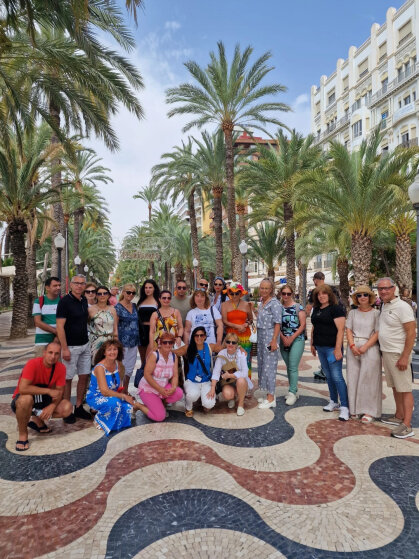
After the climb, nothing beats a stroll at sea level. The Explanada de España is that carpet of millions of tesserae that ripple like waves under your feet.
All around, palm trees sway and terraces invite you to stop for an horchata or an ice cream.
This isn’t just a walkway; it’s the city’s artery, alive at any hour. Street artists, artisans, and La Concha open-air auditorium with its outdoor concerts create a festive atmosphere.
Built in the 1950s on a glacis leveled in the 19th century. Today it’s paved with around seven million three-colored tesserae forming a wave motif.
In 2009 the pavement was restored and it now hosts craft stalls, fairs, and concerts; as evening falls the promenade comes to life with musicians and walkers.
The Santa Cruz Quarter: A Journey Back in Time
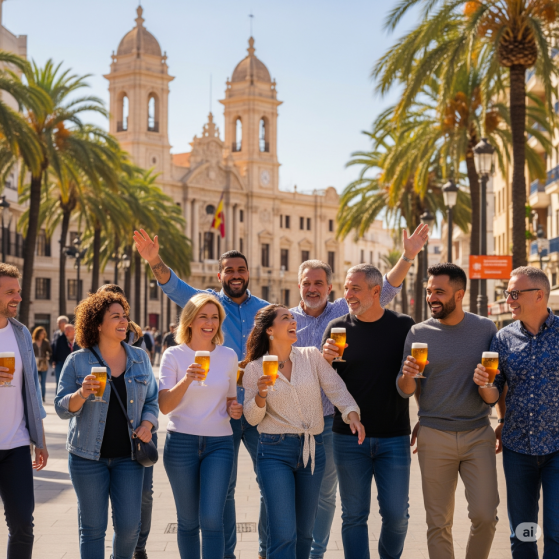
Now we delve into a maze of cobbled lanes, whitewashed houses, and flower-filled pots. The Santa Cruz quarter, clinging to the castle’s hillside, preserves the essence of Mediterranean villages.
Every corner is a postcard: from the 18th-century Hermitage of Santa Cruz to stairways that climb to viewpoints with impressive vistas.
Getting lost here means discovering artistic graffiti and little tapas bars such as, for example, Bar Hermandad Santa Cruz or La Barrita de Santa Cruz, right in front of the Basilica.
This quarter sits on an ancient natural fortress on the slopes of Mount Benacantil and its lanes date back to medieval times. It’s easily accessible from the center and preserves traditions like the Cruces de Mayo and the Hogueras de San Juan.
Postiguet Beach: A Dip Beneath the Castle
Fancy a swim? Postiguet Beach awaits at the castle’s feet. Its golden sand and calm waters make it the ideal place to cool off.
It’s comfortable, accessible, and Blue Flag certified, so you’ll find showers, sunbeds, and beach bars for every taste. While you lie in the sun, look toward the 19th-century seafront promenade lined with palm trees and sculptures; you’ll feel time slow down.
The beach is less than a kilometer long and about 50 meters wide. It’s easy to reach by tram or bus from anywhere in the city.
The Central Market: A Feast for the Senses
No visit to Alicante is complete without stopping by its Central Market. This 1922 modernist building greets you with an imposing brick staircase and a bustle that’s downright contagious.
On the ground floor you’ll find fruit, vegetables, fresh fish, and local specialties; upstairs, bakeries, butcher shops, and counters where you can enjoy a glass of wine with Iberian ham or seafood.
The best time to go is mid-morning on a weekday, when locals are shopping and sharing a quick snack before heading back to work.
This market houses 292 stalls across two floors (about 11,100 m²) and is open Monday to Saturday from 8:00 am to 2:00 pm.
It’s closed on Sundays and public holidays. In addition to the indoor stalls, there are often flower stands outside that add a splash of color.
Tabarca Island: A Marine Treasure
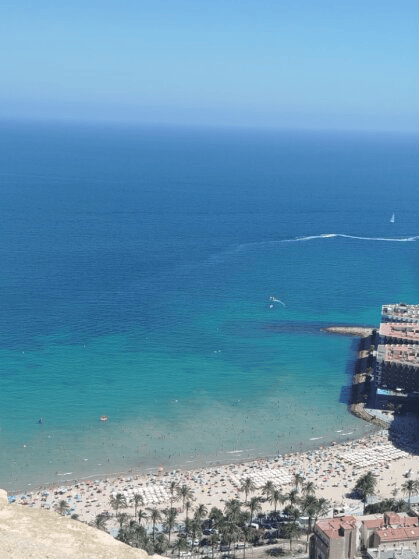
If you have a spare day, escaping to Tabarca is almost mandatory. This island, less than 2 km long, was Spain’s first declared Marine Reserve.
Ferries depart from the harbor and in half an hour you’re in a true paradise. Two-thirds of the island are rocky and uninhabited, which makes its waters a snorkeling haven.
In the inhabited area you’ll wander a walled town with three Baroque gates, white and colorful houses, an 1854 lighthouse, the Church of St. Peter and St. Paul, and the old Governor’s House.
Don’t leave without trying caldero tabarquino, a rich, brothy rice with fish that sums up the flavor of the Mediterranean.
Kontiki ferries depart from Alicante harbor (next to the Explanada) at 9:45, 10:45, 12:00, and 13:15, returning at 16:00, 17:30, and 18:15; round-trip tickets cost around €23.
You don’t need to reserve a return time. Bring water shoes for the rocky beaches and sun protection, as there’s little shade and parts of the shore are pebbly.
Alicante Harbor and The Ocean Race Museum
Back in the city, the harbor is the perfect setting for a walk at sunrise or sunset. Here you’ll see leisure boats, fishing vessels, and enormous yachts side by side.
On one corner is The Ocean Race Museum, where you can experience life on board a round-the-world race.
From the storm simulator to historic videos, it’s a visit that surprises and entertains. When you’re done, nothing beats sitting at a seafront terrace with a cocktail.
The harbor mixes recreational, fishing, and commercial vessels and has historically been one of the Mediterranean’s most important ports.
Boats to Tabarca and other sea excursions depart from here. A stroll along the piers at sunrise or sunset lets you enjoy the breeze and the colors on the water; there are also bars where you can try cocktails and local cuisine.
The Co-Cathedral of San Nicolás de Bari: A Renaissance Jewel
In the heart of the city rises the co-cathedral, understated on the outside but dazzling within. Built between 1616 and 1662 on a former mosque, it represents the Herrerian style—sober and majestic.
The real surprise awaits when you look up: a blue dome 45 meters high that lights up the entire nave. Also noteworthy are the 15th-century Gothic cloister and the Communion Chapel, considered one of the most beautiful examples of Spanish Baroque.
Admission is free, and it’s usually open all day, so you can step inside at any time for a moment of calm.
The church was built on Alicante’s main mosque after the Reconquest and became a co-cathedral in 1959.
It’s very well connected by bus and tram. Every December 6 the feast of St. Nicholas is celebrated with a solemn mass and a procession featuring a rider on horseback.
MACA: Modern Art in a Historic Building
A few steps from the co-cathedral, in Plaza de Santa María, you’ll find the Museum of Contemporary Art of Alicante (MACA).
The building dates from 1685 and was once a grain warehouse; today it houses one of Spain’s best 20th-century art collections.
Here you’ll see works by Picasso, Dalí, Miró, and Chillida thanks to the generous donation of Alicante artist Eusebio Sempere.
Admission is free and the museum is open Tuesday to Sunday, with continuous hours in summer and reduced hours in winter. It’s a space where history and modernity coexist and where each visit reveals something new.
The museum holds three main collections (20th-Century Art Collection, Juana Francés Collection, and Eusebio Sempere Collection) and rotates works periodically for conservation.
It’s closed on Mondays and on dates such as December 24, 25, 31, January 1 and 6, May 1, and local holidays Santa Faz and San Juan; however, it opens with special hours on October 9 and 12, November 1, December 6 and 8, March 19, and Good Friday.
Its location in Plaza de Santa María makes it easy to reach by public transport.
Tapas Routes: Discover the City One Bite at a Time

To finish, here’s an experience that blends food, wine, and stories: a guided tapas tour. Over about two and a half hours you’ll explore the old town with a local expert, tasting Alicante D.O. wines and enjoying tapas in bars frequented by residents.
The squares near the co-cathedral and the market become stages where the guide shares anecdotes and city secrets while you pass around small plates and good conversation.
If you have any dietary restrictions, mention them when booking. By the end, you’ll understand why the Mediterranean diet—with its olive oil, legumes, grains, fruits and vegetables, and a touch of wine—is so special.
These routes usually include three drinks (wine, beer, or soft drinks) and about eight tapas, both individual and to share. They typically run any day of the week and cost around €125 per person.
An Unforgettable Memory
Alicante isn’t just sun and beach; it’s history, art, gastronomy, and above all, emotions. I hope this story has transported you to its streets—and that you’ll soon experience them in person.
Alicante and Wine: Wineries and Tasting Routes
Welcome to the sun-bathed Costa Blanca, where the Mediterranean breeze caresses the vineyards and wine flows with as much force as its history.
Although Alicante is famous for its beaches, it’s also a secret destination for wine lovers. The region has a centuries-old winemaking tradition and produces some of Spain’s most distinctive wines.
Why Try Alicante Wines?
Alicante wines, especially those made from the native Monastrell grape, stand out for their unique character.
The warm, dry climate, together with varied soils and the proximity of the sea, gives these wines an intense, fruity flavor and deep color.
In addition to Monastrell, you’ll find aromatic whites and sweet wines like the historic Fondillón, a fortified wine unique in the world. That’s why every glass tells a story of sun, breeze, and Mediterranean earth.
Wineries Not to Miss Near Alicante
This family-run winery, with more than four generations of history, offers intimate visits in its home-museum, where you tour the old wine press, the vineyard, the fermentation hall, and the barrel room.
The experience ends with a tasting of four wines—white, rosé, red, and sweet—paired with local products such as savory cocas, cured meats, cheeses, bread with olive oil, and fig-date bread.
Regulars describe the place as “cozy, full of history and Spanish culture, with magnificent wines and excellent tapas.”
Alejandro’s passion and knowledge of winemaking add a personal touch many travelers remember. There’s even a gastronomic option with a three-course meal paired with five wines at a very reasonable price.
Vins del Comtat (Cocentaina)
This winery hides among Alicante’s mountains. Here, the wine “speaks of the landscape,” and you can walk the vineyards to discover how the different vintages are made.
The house philosophy combines modern techniques with artisanal know-how, turning Alicante grapes into high-quality bottles.
The vineyards spread across the mountains, drinking in the Mediterranean sun and caressed by the sea breeze.
During the visit you can learn about native varieties such as Moscatel de Alejandría, Giró, or Monastrell, as well as Cabernet Sauvignon, Pinot Noir, Petit Verdot, Merlot, or Shiraz.
Although they’re known for their Monastrell wines, the winery also produces reds, whites, rosés, and sweet wines.
Bodegas Enrique Mendoza (Alfaz del Pi, Benidorm)
Located on the Costa Blanca, it enjoys a microclimate with 320 days of sunshine a year; the winery invites you to live wine as a philosophy of life.
On the “Gold Visit” you’ll tour the experimental pruning field, the finished-product hall, the bottling room, and the underground cellar with American and French oak barrels.
Afterwards, beneath a historic Riu-Rau, you’ll taste seven of their best wines—from a young Chardonnay to the sweet Dolç de Mendoza—paired with extra virgin olive oil, a goat’s-cheese toast, Spanish cured meats, and a carefully curated board of artisan cheeses.
Visitors praise the tour for its detailed explanation of the winemaking process and value the tasting of seven wines accompanied by cured meats, cheeses, and even chocolate.
Others highlight the surprise of discovering wines like Xaconero 2021 during a tasting of six very different wines.
How to Experience a Wine Route
You can visit the wineries on your own, by renting a car or using public transport, but a guided route will let you:
- Learn from expert guides who share local stories and curiosities.
- Forget about logistics: transfers are usually included.
- Enjoy private tastings or exclusive spaces, common on organized tours.
- Savor pairings with local products: tapas, cheeses, and traditional dishes.
Some agencies combine several wineries in one day and others include visits to charming towns such as Cocentaina or Villena. Whatever you choose, take your time and let the sobremesa work its magic: here, the best conversations begin when the meal ends.
Shall We Toast?
Whether you’re an enthusiast or just curious, Alicante’s wine routes are an unforgettable way to explore unique landscapes and flavors.
Raise your glass, admire the intense colors of the reds or the brightness of a mountain white, and toast to a sensory journey only the Costa Blanca can offer.
Mastering the Spanish Menu: A Guide to Ordering Like a Local
Spanish gastronomy is a feast of flavors that follows its own rhythm. Here are some keys to help you feel at ease in any restaurant in Alicante (and Spain in general):
Meal Times
Breakfast (7:00–9:00): light—usually coffee with toast or pastry.
Mid-morning snack (10:30–12:00): the “second breakfast,” a sandwich or a tapa.
Lunch (14:00–16:00): the main meal of the day. Many restaurants offer a menú del día with two or three courses and a drink.
Dinner (21:00–23:00): lighter, usually shared tapas.
Travel tip: if you’re hungry early (around 7:00 pm), look for a tapas bar, since most kitchens open later.
Dishes You Can’t Miss in Alicante
Paella and rice dishes: in Alicante, try versions like arroz a banda.
Tapas: patatas bravas, calamares a la romana, croquetas… perfect for trying a bit of everything.
Fideuà: paella’s “cousin,” but with noodles.
Gazpacho or salmorejo: chilled soups ideal for summer.
Jamón ibérico: a must—order a plate to share.
Local desserts: Jijona nougat and artisanal ice creams to sweeten the finish.
The Bill and Tipping
Mandatory tipping: it doesn’t exist in Spain.
When to tip: only if service has been exceptional.
How much: a few coins at cafés, a couple of euros in restaurants, or 5–10% in special cases.
How to ask for the bill: say “La cuenta, por favor” when you’re ready to pay.